ACT industry update

Webinar: Clean emissions in the transportation sector

More than 80 representatives of stakeholder groups and legislative offices attended a legislative briefing held by Senator Michael Moore (D-Milbury) on Jan. 28 to learn more about the impacts of the Advanced Clean Truck (ACT) and Heavy-Duty Omnibus (HDO) rules on end-users of medium- and heavy-duty (MHD) trucks.

After an introduction from Senator Moore, who has sponsored Senate Docket 137, An Act relative to responsibly reducing emissions in the transportation sector, Kevin Weeks, TAM’s Executive Director, led a panel overview of how the ACT / HDO rules have impacted the ability of the end-users to acquire cleaner and much needed MHD trucks. Panelists included Chris Marsh, Vice President of Advantage Truck Group; Gerry Carney, President of CN Wood; Chris Cronin, former Director of the Town of Andover’s Department of Public Works; and Mark Molloy, Principal of Cascade Strategies.

The panel presentation provided an overview of the MHD truck purchasing process from truck dealer to upfitter to purchaser; a discussion of the direct impacts of the ACT/HDO rules; the perspective of a large municipal purchaser of MHD vehicles and strategies for encouraging cleaner emissions in the short and long term.

The presentation represents a continuing series of education and advocacy events led by end-users of MHD Truck to inform key policymakers about real-world impacts of the ACT / HDO rules while also highlighting attainable emissions reductions strategies today.

The web conference was recorded on Zoom; you can view it here. If a passcode is required, enter 6i%^app7


ACT industry update

State trucking groups tout CARB retreat, continue fight

From Transportation Topics.

State trucking associations whose statehouse legislators chose to follow California emission regulations welcomed the defeat of the Golden State’s Advanced Clean Fleets rule, but remain concerned about how their states may still impose versions of the Advanced Clean Trucks regulations.

Truckers, business leaders and state lawmakers in Massachusetts have been voicing their concerns about the negative impacts of the ACT restrictions to no avail with Gov. Maura Healey, said Kevin Weeks, executive director of the Transportation Association of Massachusetts.

“While Massachusetts, as one of the early CARB adopters, is happy that the ACF regulation was pulled, we are in the midst of the unworkable Advanced Clean Truck rule, which was instituted Jan. 1. Our efforts, as well as a coalition of over 40 Massachusetts associations, have yet to be able to get any response from the Healey administration on a deal to this well-intentioned but unrealistic mandate,” Weeks said.

Read the full article online at Transport Topics, including comments from the leaders of multiple state trucking organizations.

ACT industry update

Boston 25 News – Regulations force sales of EV trucks that “do not exist”

From Boston 25 News on Jan. 14.

The sale of semi and other heavy-duty trucks has plummeted 99% in Massachusetts as the result of new environmental regulations designed to reduce carbon emissions, according to the association that represents dealers in Massachusetts.

“There was over 1,000 new vehicles on order at this time last year. Today there’s less than ten,” said Kevin Weeks, Executive Director, Transportation Association of Massachusetts.

Weeks said manufacturers are prohibited from selling diesel trucks unless they also have buyers for electric trucks, and he said there is scarce demand for electric due to a lack of available inventory, significantly higher prices, and nearly non-existent charging infrastructure.

To read the full article and watch the video report, visit the Boxton 25 News website.

new truck with two drivers

Massachusetts limits lookback period for some lifetime CDL disqualifications

Gov. Maura Healey wrote to the Transportation Association of Massachusetts on Jan. 7, noting she had signed an Act Relative to Commercial Driver’s Licenses. The letter is available here.

Revisions to Chapter 90F, Section 9 of Massachusetts General Law limit the lookback period for lifetime disqualification for offenses that occurred before the federal implementation deadline of September 30, 2005, except where required by federal law or in instances where a driver has three or more convictions for operating under the influence.

The legislation added the following paragraph.

(I) A person shall not be disqualified from operating a commercial vehicle under paragraphs (A) or (B) based upon convictions occurring on or before September 30, 2005, unless: (i) the person has 3 or more convictions for operating under the influence under section 24 of chapter 90 or (ii) disqualification is required under 49 C.F.R. 383.51 or any other federal statute or regulation.

More information about the situation many Massachusetts drivers previously faced is available online.

From Mass.gov.

Drivers notified by the RMV in August that their CDL was being downgraded, who may benefit under this change, will be notified if their lifetime commercial disqualification has been removed, and provided with any next steps to retaining or maintaining their commercial driving privilege.

Certain additional drivers with a current Massachusetts based lifetime disqualification or who are ineligible to obtain a CDL due to convictions on or before September 30, 2005, may now be eligible to regain their commercial driving privileged. Those drivers may contact the RMV dedicated phone line (617) 657-3623 if they are interested in obtaining a CDL to inquire whether they are now eligible.

There are several reasons the removal of the lifetime disqualification does not permit immediate restoration of your commercial driving privileged.

A few examples are:

  • Having a post September 30, 2005 conviction and not having served all or part of the mandatory 1-year disqualification;
  • Having other obligations restricting your commercial, such as being in prohibited status with the Federal Drug and Alcohol Clearinghouse;
  • Having an expired commercial medical self-certification;
  • Having an Ignition Interlock Device Requirement; or
  • If you have outstanding child-support, taxes or other financial obligations impacting your license.
Massachusetts state house dome

Legislators continue to urge governor to delay ACT implementation

On Dec. 23, More than 46 Massachusetts state legislators requested that the Commonwealth’s adoption of the Advanced Clean Truck and Heavy Duty Omnibus rules be delayed until January 2027.

Read the letter below sent to Governor Maura Healy and Bonnie Heiple, Secretary of the Executive Office of Energy and Environmental Affairs. A signed PDF version is available to download and print.


December 23, 2024

Dear Governor Healey and Commissioner Heiple,

We write to request a delay of the upcoming Advanced Clean Truck (ACT) rule that will come into effect January 1, 2025. While we all want to reduce emissions from the transportation sector, implementing the ACT rule at this time may unintentionally lead to more emissions while harming our public and private sector partners throughout the Commonwealth.

The Massachusetts Department of Environmental Protection’s (MassDEP’s) recent decision to delay the heavy-duty omnibus (HDO) rule by one year and exercise discretion for the enforcement of the ACT rule for government purchases of snowplows and street sweepers recognizes the difficulty public and private fleet owners currently face. However, this decision did not provide real relief for our municipalities and industries that rely on access to new, cleaner medium- and heavy-duty trucks (MHDs).

The fact remains that technology and infrastructure have simply not reached the level where they need to be to support the widespread adoption of electric MHDs at this time. Electric MHD technology is improving, but there still remain large gaps in the number and types of available electric vocational trucks that our public and private sector partners rely on. Even with the Commonwealth’s rebate program for electric MHDs, the cost of these electric trucks are two to three times more expensive than their clean diesel or other clean technology counterparts. Finally, even if a public or private sector entity purchased an electric MHD, we have more work to do to build out our electric infrastructure. We recognized this fact in our recently passed clean energy law which specifically directed the Electric Vehicle Infrastructure Coordinating Council (EVICC) to report on the needs for charging MHD throughout the Commonwealth.

Current sales within the Commonwealth have shown that our state, municipal and private partners have shied away from purchasing electric MHDs for the aforementioned reasons. It is unrealistic to think recent amendments to the ACT rule adopted by the California Air Resources Board (CARB) will incentivize manufacturers or end-users to change their ways. Our public and private sector fleet managers are tasked with investing their limited resources in a reasonable and responsible manner – whether working within a limited municipal budget or buying a vehicle that can reliably perform the task it is needed for. As a result, implementing the ACT rule on January 1st will most likely lead to our public and private sector partners keeping their existing dirtier trucks on the road for a longer period of time. Given the estimate that fifty percent (50%) of the Commonwealth’s truck inventory pre-dates the United States Environmental Protection Agency’s (EPA’s) 2010 clean engine standards, we will be losing the opportunity to retire some of these trucks in the coming year as newer, cleaner diesel or other clean technology driven MHD cannot even be purchased.

We recognize that the Commonwealth sought to be one of the earliest adopters of the ACT rule. Delaying the ACT rule for a year or two does not mean that we will be retreating from the critical task of reducing emissions from the transportation sector. A delay in the ACT rule means that we will have additional time to build out our electric infrastructure, manufacturers will continue to improve electric MHD technology, and our public and private sector partners can reasonably budget for future electric MHD purchases tomorrow while purchasing cleaner MHDs today.

We appreciate your consideration of this matter and respectfully ask that you delay the Commonwealth’s implementation of the ACT rule.

Members of the Massachusetts State Legislature


tesla semi-truck on road

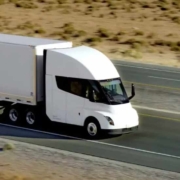
Tesla semi crash, fire mark NTSB’s first EV truck case

Emergency responders tried to control the blaze by dumping 50,000 gallons of water to extinguish the flames and cool the truck’s batteries.

ACT industry update

Eight states push for ACT delay as deadline approaches

Trucking organizations representing Colorado, Massachusetts, New Jersey, New Mexico, New York, Oregon, Washington and Rhode Island recently wrote to the governors of these states. They wrote to express their concerns about the Advanced Clean Truck rules, which will take effect in 2025 and 2027.

The letter is available as a PDF to download but also below.


Dear Governors Polis, Healey, Murphy, Lujan Grisham, Hochul, Kotek McKee, Inslee and Governor-Elect Ferguson:

On behalf of the trucking industry in each of your respective states, we are writing to express our collective concerns with the Advanced Clean Trucks (ACT) rules, which are set to take effect at the beginning of 2025 and 2027.

In your letter to the Truck and Engine Manufacturers Association on November 8, 2024, you cite the important role ACT plays in our states’ plans to achieve our greenhouse gas emissions-reduction goals and the threat of climate change.

To be clear, we fully support these goals, and the trucking industry has worked collaboratively with government partners across the country for years to reduce the emissions from heavy-duty trucks. In fact, 60 trucks today equal the output of one in 1988, and, since the implementation of clean diesel technology in 1974, pollutants have been reduced by 99 percent. These reductions are in part due to the trucking industry’s partnership with the Environmental Protection Agency (EPA) SmartWay program. The SmartWay program is a public-private partnership with the shared goal of reducing overall emissions and greenhouse gases, cutting fuel use, and improving freight sustainability. Our associations and many of our members voluntarily became partners in the SmartWay program and have worked closely with the EPA since the program was launched in 2004. The program has been an outstanding success as SmartWay companies have avoided emitting 170 million metric tons of CO2, 2.8 million short tons of NOx, and 115,000 short tons of PM, which helps protect the environment and keep Americans healthy.

The damage that our industry will incur by implementing ACT on its current rushed timeline will curtail these critical efforts as clean diesel truck availability will become limited, keeping older, heavier polluting trucks on the road. It will also lead to the inevitable loss in jobs and businesses. Rather, we encourage your states to look at an alternative approach, similar to the SmartWay program, which is a voluntary program with a proven record of success and widely supported by the industry. We are asking that the ACT date for implementation be deferred in order to ensure that our dealers and trucking companies are not unduly harmed, and to provide for an opportunity to work together to find a solution that works toward our state’s environmental goals.

The situation on the ground has changed since ACT was adopted. The extended recovery from the COVID-19 pandemic diminished resources for manufacturers, dealers, and operators alike. The entire supply chain shifted to prioritize essential services and investments. While our industry can adapt and comply with reasonable regulations, ACT has already significantly impacted dealer operations well ahead of the official start date.

From the West Coast to the East Coast, economic and structural limitations severely limit the American trucking industry. By and large, interstate electric infrastructure is completely lacking. Take New York for example, since ACT’s passage in 2021, not a single publicly available charging station has been built for medium and heavy-duty vehicle charging statewide. And while truck operators in Washington, California, and Oregon appreciate the continued attempt to secure federal funding for an EV truck charging corridor along Interstate 5, the reality is that it will take years to complete. We need this infrastructure now.

We are also cognizant of a changing political environment. As ACT rules were initially pursued, they met a strong opponent in President Donald Trump’s administration—which passed a 2019 resolution effectively removing California’s legal authority to set vehicle emissions rules and set zero-emission vehicle mandates. By all indications, with President Trump’s history of comments and regulations regarding emissions and electric vehicles, it is within reason to believe his administration will renew his, since lapsed, 2019 resolution and ultimately pull the Clean Air Act waiver from the Environmental Protection Agency. David Heller, Senior VP of Government Affairs for the Truckload Carriers Association (TCA), has already indicated that national groups are prepared to discuss emissions regulations with a new Trump presidency.

If the Trump administration is only going to reverse course, is it worth the collateral damage of trying to implement these ill-timed and likely fatal regulations? Rather, we stand ready to have meaningful conversations on actions the industry can take today to immediately reduce emissions.

Trucks are the backbone of our nation’s economy. Communities across the country depend largely on trucks to move their goods. A census bureau report found that, in 2017, the latest year with available data, trucks transported 71.6% of all goods in the United States. This equates to $10.4 trillion. In other words, trucking is the largest single mode form of goods transportation by a longshot. When the trucking industry suffers, so to do all the sectors of the economy that rely on it. Access to critical goods, medicines, and care devices are at-risk. Major infrastructure projects and essential municipal services will be delayed. Even clean energy projects—from solar to wind—won’t move forward without trucks. None of this happens without trucks.

Right now, dealers across the country are struggling to find a way to navigate this situation. Many will not survive the economic impact of these rules. Many will shut down after being in business for generations. Many will cut jobs. Many will lose everything.

At our core, the greater American trucking industry supports the goals of ACT. We are not pushing back because we’re opposed to sustainable change. It is possible to work together to develop a commonsense solution which supports each of our states’ business and environmental goals. Once we ensure “business-as-usual” for truck operators, dealers, and manufacturers and a true commitment to a shared approach to reducing emissions, then we can take meaningful steps towards getting more electric trucks on the road. Collectively, we welcome the opportunity to sit down to discuss this situation, but let us be clear, we are running out of time.

Sincerely,

  • Gregory Fulton, President/CEO Colorado Motor Carriers Association
  • Kendra Hems, President Trucking Association of New York
  • Kevin Weeks, Executive Director Transportation Association of Massachusetts
  • Jana Jarvis, President & CEO Oregon Trucking Association
  • Jennifer Blazovic, Interim Executive Director New Jersey Motor Truck Association
  • Christopher Maxwell, President & CEO Rhode Island Trucking Association
  • Johnny R. Johnson, Managing Director New Mexico Trucking Association
  • Sheri Call, President & CEO Washington Trucking Association
association logos

ACT industry update

N.J. Assembly committee approves delay of clean-truck rule

After hearing more than two hours of testimony, members of a New Jersey State Assembly committee voted Thursday to advance a bill that would delay the implementation of the Advanced Clean Truck (ACT) rule by two years. The rule was initially set to go into effect in January.

The rule would require manufacturers of medium—and heavy-duty trucks to sell an increasing percentage of new battery-powered vehicles annually to reduce air pollution.

Stakeholders and business owners in Massachusetts are wondering what Commonwealth leaders are waiting for.

From the New Jersey Business & Industry Association.

An Assembly committee on Thursday voted unanimously to advance legislation supported by NJBIA and the state’s trucking industry that would delay the state’s compliance with California’s clean-engine rules for medium and heavy-duty trucks for two years.

Bill A-4967, sponsored by Assemblyman Clinton Calabrese (D-36), was released by the Assembly Transportation and Independent Authorities Committee after three hours of testimony from businesses who noted the infrastructure for charging fleets of EV trucks is not publicly available yet. The clean truck rule, currently set to take effect Jan. 1, “puts the cart before the horse,” would disrupt supply chains and increase the cost of food and products trucks transport, they said.

Although the Commonwealth announced the Heavy Duty Omnibus regulation would be delayed until 2026, the ACT rules are scheduled to be implemented in about 15 days (Jan. 1, 2025).

The Healy administration also carved out ACT exemptions for certain public works vehicles for state and local governments only.

new truck with two drivers

CARB rules seen as hindrance to obtaining new diesel vehicles

From Transport Topics.

The sale of zero-emission vehicles in California over the past two years has been better than anticipated, but the regulatory emphasis on transitioning fleets from diesel to electric has left some of the state’s large truck dealers with an inability to obtain new diesel trucks to sell to carriers.

“Both the Advanced Clean Trucks and low NOx Omnibus regulations are severely limiting the availability of new trucks in California and California opt-in states,” Mike Tunnell, California-based senior director of environmental affairs/research for American Trucking Associations, told the California Air Resources Board at a recent hearing.

“As noted in CARB Executive Officer Steven Cliff’s recent memo to the board,” he said, “the ACT requirements are being pushed onto the dealerships and fleets. Internal combustion engine sales fleets are experiencing restrictions on the availability of new ICE trucks. And, when they are able to purchase them, these trucks come at a significant price premium.

Read the full article on Transport Topics.

white truck with electric charging stand

Five states seek delays on 2025 CARB regulations

From Transport Topics.

Truckers and legislators in half of the 10 states that automatically adopted California’s Advanced Clean Trucks regulation are trying to put the brakes on before the 2025 rules take effect for their residents.

At issue are looming requirements to start imposing the regulation enacted by the California Air Resources Board zero-emission electric vehicles sales requirements, plus a one-time reporting requirement for large companies and fleets.

The first of the 10 states to follow California’s lead will see CARB restrictions start in 2025. They are Massachusetts, New Jersey, New York, Oregon and Washington.

Read the full article at Transport Topics.