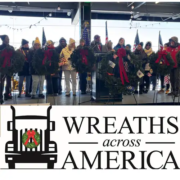
Wreaths Across America event, Dec. 2025

A successful Wreaths Across America event

The Trucking Association of Massachusetts was honored to host the convoy stop of Wreaths Across America on Dec. 9 at Polar Park. It was a very special event honoring those who have given all for their country and our freedoms.

Special thanks to all volunteers and sponsors for their participation. It is very appreciated.

Below are a couple of snapshots from the event. State Rep. Steven Xiarhos of the Barnstable 5th district, with Gold Star families, and TAM Executive Director Kevin Weeks.

Wreaths Across America event, Dec. 2025

Wreaths Across America event, Dec. 2025

legislation testimony

TAM Testimony: We oppose Senate Bill 1036, related to liability

The following testimony was sent to the Massachusetts Joint Committee on the Judiciary. Our testimony strongly opposes Senate Bill 1036, An Act Relative to Liability for Accidents and Collisions with Vulnerable Road Users Involving Large Motor Vehicles and Trailers.

The proposed legislation conflicts with federal law, unfairly distorts liability standards, and creates significant operational and economic burdens without clear evidence of proportional safety benefits.

A downloadable PDF version of this testimony is available.


Dear Chair Edwards, Chair Day and Members of the Committee:

On behalf of the Transportation Association of Massachusetts (TAM), I am writing in strong opposition to Senate Bill 1036, An Act Relative to Liability for Accidents and Collisions with Vulnerable Road Users Involving Large Motor Vehicles and Trailers. This legislation, while well-intentioned, conflicts with federal law, unfairly distorts liability standards, and creates significant operational and economic burdens without clear evidence of proportional safety benefits.

As you know, Senate Bill 1036 would establish a rebuttable presumption of negligence against operators of trucks or trailers above 10,001 pounds if certain specified equipment—lateral protective devices, convex and crossover mirrors, and backup cameras—is not installed. This approach directly invites federal preemption under 49 U.S.C. §14501, which provides that “[n]o State… shall enact or enforce any law, rule, regulation, standard, or other provision having the force and effect of law relating to a price, route, or service of any motor carrier… with respect to the transportation of property.”

In particular, the enactment of Senate Bill 1036 would most definitely impact motor carriers’ “price, route or service”. At the outset, retrofitting fleets with multiple new devices represents thousands of dollars per vehicle; not to mention the requirement to upfit an entire fleet. Equipment requirements do not account for differences in truck design, duty cycle, or operating environment, which further drive up the costs of so equipping trucks. No business can easily absorb these costs without impacting their price to provide services to Massachusetts residents and business. With respect to routes and service, companies leery of the risk associated with travelling in Massachusetts will most certainly alter their routes to avoid a connection with this state. In turn, this means that Massachusetts residents will see reduced options for service from transportation carriers throughout the state.

While federal law permits states to enact certain safety practices, the mechanism proposed by Senate Bill 1036 is impermissible. Specifically, the bill alters liability law in a way that forces carriers to adopt equipment requirements under threat of presumptive negligence. Senate Bill 1036 does not reflect safety reform, but tort reform – proposed to circumvent likely violations of federal law, as stated above, or concerns about its impact on interstate commerce otherwise protected by the Commerce Clause of the United State Constitution. “[T]he incantation of a purpose to promote the public health or safety does not insulate a state law from Commerce Clause attack. Regulations designed for that salutary purpose nevertheless may further the purpose so marginally, and interfere with commerce so substantially, as to be invalid under the Commerce Clause.”. Kassel v. Consolidated Freightways Corp., 450 U.S. 662, 670 (1981). There is no statistical evidence that this type of mechanism – a rebuttable presumption from negligence – actually leads to increased safety.

While Senate Bill 1036 is motivated by laudable intentions, it presents serious legal, economic, and practical concerns. It risks federal preemption under 49 U.S.C. § 14501, imposes disproportionate costs on Massachusetts carriers, and unfairly distorts liability law. For these reasons, the Transportation Association of Massachusetts respectfully urges the Committee to place this legislation into a study order.

Thank you for your consideration of this important matter.

Sincerely,

Kevin Weeks
Executive Director

A downloadable PDF version of this testimony is available.

legislation testimony

TAM Testimony – Supporting Acts Relative to the Taxation of Rolling Stock

The following testimony was sent to the Massachusetts Joint Committee on Revenue. Our testimony supports Senate Bill 1943, Senate Bill 2081 and House Bill 3148, Acts Relative to the Taxation of Rolling Stock.

The testimony supporting these initiatives is provided below, but it is also available as a PDF download. The PDF download includes attachments with Fact Sheets, graphics and the Rolling Stock Initiative language.


Dear Chair Eldridge, Chair Madaro and Members of the Committee:

On behalf of the over 250 member companies of the Transportation Association of Massachusetts (TAM), I am writing in strong support of Senate Bill 1943 / Senate Bill 2081 / House Bill 3148, Acts Relative to the Taxation of Rolling Stock. This initiative, which will lead to greater public safety and additional tax revenue, will also lead to a cleaner environment while creating numerous jobs with competitive salaries. As the Commonwealth seeks to lower emissions from the transportation sector and improve road safety, this legislation, which has been passed by the Massachusetts House of Representatives as part of other legislative vehicles in the past three sessions and received a favorable report from this Committee the past three sessions, can be a part of the solution.

As you may know, TAM has been the voice of the trucking industry in Massachusetts since 1919. One of the oldest transportation associations in the United States, we represent a wide variety of companies ranging from small, family-owned trucking companies with a single truck to large national trucking companies with thousands of trucks. The trucking industry within the Commonwealth is responsible for transporting over 90% of all goods and products found in our homes and workplaces. In addition to being a key facilitator for the growth of other industries, the trucking industry is a significant creator of jobs within the Commonwealth. As a recent study by the Dukakis Center for Urban Research & Policy at Northeastern University stated, “[t]he overall trucking industry (including private and for-hire trucking) represents about one in 12 jobs or about 300,000 jobs in Massachusetts. And, trucking companies meet all Massachusetts freight movement needs.” (“The Importance of the Trucking Industry to the Massachusetts Economy”, Pritchard, R. & Scott, A., p.3 (May 2018)). In terms of employment demographics, the trucking industry is rapidly diversifying as companies seek to hire drivers to meet the growing demand for trucking services. (“Truck Driver Shortage Analysis 2019”, Costello & Karickhoff, American Trucking Associations,July 2019)(“ In 2018, 40.4% of [truck] drivers were minorities, which has jumped 13.8 percentage points from 26.6% in 2001.).

The Commonwealth’s commercial trucking industry has been experiencing a decline, as many trucking companies have relocated to other states or simply closed down. Part of the reason that trucking companies have left the state is due to the Commonwealth’s tax policies. In particular, the Massachusetts Department of Revenue (DOR) collects sales and use tax for rolling stock (tractors and trailers) purchased in other states which have an exemption (i.e. tractors and trailers used in interstate commerce). As a result, any company with a nexus within the Commonwealth is being charged sales and use tax by the DOR even though the rolling stock was purchased in other states. Accordingly, various truck companies, who may be domiciled in Massachusetts or have repair facilities in Massachusetts, are now seeking to locate them outside of the state to reduce the nexus necessary to collect such tax.

Exempting the sale and use of rolling stock from taxation will bring Massachusetts in line with a majority of other states (37) within which an exemption from sales and use tax for rolling stock already exists. In fact, every surrounding New England state, except Vermont which applies a de minimus fee, has a rolling stock exemption in place. That said, amending Mass. Gen. Laws ch. 64H (i.e. sales tax) and Mass. Gen. Laws ch. 64I (i.e. use tax) to specifically exempt rolling stock from the sales and use tax brings much more than simple tax relief to the trucking industry. According to the aforementioned study conducted by the Dukakis Center for Urban Research & Policy, the elimination of the sales and use tax on rolling stock will, following national trends, create “2,768 more employees and 2,076 more power units … operating and generating an additional $15.9 million in tax revenue per year; while not estimable, … the impact on private fleets may be just as large.” (“The Importance of the Trucking Industry to the Massachusetts Economy”, Pritchard, R. & Scott, A., p.14 (May 2018)).

The need for eliminating the taxation of rolling stock cannot be overstated. First, this initiative will create a more attractive environment for trucking companies to remain in the Commonwealth. Trucking companies rely on constantly maintaining and upgrading their equipment. This means purchasing new tractors and trailers, as well as various other parts, tires, etc., on a regular basis. If trucking companies know that their out-of-state purchases will incur an in-state tax, the companies will work to continue to reduce their nexus to Massachusetts. As it stands, Massachusetts trucking companies are already at a competitive disadvantage when competing against carriers located in the neighboring states.

Second, but just as important, this initiative will have a significant positive impact on the environment. Exempting the sale and use of rolling stock from taxation will encourage companies to either purchase new equipment with the latest technology available or incentivize companies to operate their newer trucks in the Commonwealth. Removing the incentive to hold onto trucks as long as possible in Massachusetts will lead trucking companies to purchase new trucks. By purchasing new trucks, companies will be reducing the presence of particulate matter (PM2.5) by 99% and the presence of nitrogen oxide (NOx) by 98%. The key, however, is getting older, more pollution-emitting trucks off the road. Eliminating this disincentive provides the desired result.

Third, this initiative will make the Commonwealth’s roads safer. In terms of public safety, new trucks include lane-departure, crash collision and speed regulator technology that significantly improve road safety. These technologies, which are only included in new trucks, will make Massachusetts roadways safer. Unfortunately, under the current taxation system for rolling stock, trucking companies and companies with trucking fleets are incentivized to keep their old, less safe trucks on the road. For trucking companies with national fleets, Massachusetts’ current law encourages these companies to prevent any of their new trucks from entering the Commonwealth to avoid tax exposure.

Fourth, by keeping trucking companies in the Commonwealth, the good jobs and competitive salaries that these companies offer will remain within the state. According to the United States Bureau of Labor Statistics, Massachusetts is in the top third for annual mean wage for heavy and tractor-trailer drivers within the country. (See http://www.bls.gov/oes/current/oes533032.htm). As trucking companies find Massachusetts tax policy less favorable than neighboring states, the decrease in Massachusetts trucking companies will become even more significant. Fifth, if the Commonwealth discourages trucking companies from domiciling in the state, transportation expenses will rise — further impacting the high cost of living already experienced in the Commonwealth. The costs associated with transporting goods are fairly straightforward. (See https://truckingresearch.org/wpcontent/uploads/2025/07/ATRI-Operational-Costs-of-Trucking-07-2025.pdf) (“The industry’s average cost of operating a truck in 2024 was $2.260 per mile, a 0.4 percent decline compared with the previous year. However, when lower fuel costs are excluded, marginal costs rose 3.6 percent to $1.779 per mile – the highest costs ever recorded by the American Transportation Research Institute (ATRI) for non-fuel operating costs.”) If the Commonwealth’s tax policies continue to cause trucking companies to domicile elsewhere, the additional fuel, tolls and vehicle maintenance, among other costs, will be borne by Massachusetts residents and businesses that already rely on the industry for over 90% of their goods. If the COVID-19 pandemic demonstrated one thing about the trucking industry, it is that it remains essential to residents and businesses alike.

This initiative is a matter of common sense. Given that neighboring states such as New York, Rhode Island, Connecticut, New Hampshire and Vermont (partial) exempt rolling stock from sales and use tax, Massachusetts’ current tax policy is causing higher costs for Massachusetts residents and businesses while driving economic opportunity to neighboring states. This initiative, which has been passed by the Massachusetts House of Representatives during the past three sessions, will not exclude trucking companies from the myriad of other taxes and fees the industry pays to the Commonwealth each year. This initiative simply tries to keep Massachusetts on par with the vast majority of states (37) with an exemption already in place.

On behalf of the thousands of men and women in Massachusetts who rely on the good jobs and competitive salaries these Massachusetts companies provide; I respectfully request that you issue a favorable report to this legislation. Again, passing language to create an exemption from the Massachusetts sales and use tax as applied to rolling stock for trucks will produce additional tax revenue in the future while strengthening the trucking industry in Massachusetts in a manner that also improves the environment and public safety.

For your review, I have attached a variety of information about this initiative. If you have any questions or concerns, please do not hesitate to let me know. I appreciate your consideration of this important matter.

Sincerely,

Kevin Weeks
Executive Director
Please see the downloadable PDF, which includes attachments with Fact Sheets, graphics, and the Rolling Stock Initiative language.

Businesses, associations strongly oppose Massachusetts HB 1014 & SB 588

The Transportation Association of Massachusetts and other industry associations and businesses strongly oppose House Bill 1014 and Senate Bill
588  – An Act Establishing a Climate Change Superfund. The legislation imposes retroactive liability on fossil fuel companies in an attempt to fund climate change mitigation projects.

The letter was sent to Representative Christine Barber Chair, Joint Committee on Environment and Natural Resources and Senator Rebecca Rausch Chair, Joint Committee on Environment and Natural Resources, on Sept. 25.

A PDF version of the letter is available online.


Dear Chairs Barber, Chair Rausch and members of the Committee,

The undersigned businesses and associations – representing virtually every aspect of the Massachusetts economy – write to express our strong opposition to House Bill 1014 and Senate Bill 588, “An Act establishing a climate change superfund.”

If adopted, this legislation would impose sweeping retroactive liability on fossil-fuel companies in an attempt to fund climate change adaptation projects. The companies subject to the legislation would be assessed payments based on their estimated impact as determined by a climate-cost study assessing the economic repercussions of emissions within the state. It would create a system that levies retroactive fees solely against one segment of the economy – the fossil fuel industry – for activities that were and remain legal, but the impact would be felt by almost every sector of the business community.

Most alarming is the fact that the legislation could significantly increase the costs of living and doing business in Massachusetts to a degree that could devastate the commonwealth’s economy. The U.S. Chamber of Commerce Institute for Legal Reform recently analyzed the proposal and determined that this legislation could significantly raise prices for Massachusetts residents.[1] The report determined that for every billion dollars in fees assessed under the bill consumers would pay $167 more in transportation costs, $61 more in pass-through costs from business and $41 more in electrical bills, totaling $276 per household. Last session’s version of the legislation proposed a $75 billion fee which would create an average household burden of $20,682 on Massachusetts families at a time when affordability is the primary issue in the state.

A recent study of similar legislation proposed in California conducted by the California Business Roundtable also determined that the climate superfund charges would ultimately be passed along to the consumer though significantly higher prices for gasoline, natural gas, and electricity.[2] This study concluded that the California proposal would increase the annual household burden on families up to $3,400 with the sharpest impact falling on renters and low-income residents. Gasoline prices would rise by 43 percent and natural gas rates would increase 117 percent for industrial users and 52 percent for households.

The Healey Administration as well as the House and Senate have wisely made the cost of living a central part of policy decisions this and last session. Adopting this legislation would singlehandedly undermine all those efforts. The steep spike in energy costs could cripple industries like manufacturing, trucking, logistics, and construction, among others. Based on analysis done for similar legislation, Massachusetts residents could see double digit (percent) increases in electricity rates, which would make the state even more unaffordable.[3]

We ask that you please put the consumers first when considering the merits of this proposal and not give this bill a favorable report. House Bill 1014 and Senate Bill 588.

Respectfully,

Brooke Thomson, President and CEO
Associated Industries of Massachusetts

Greg Reibman, President & CEO
Charles River Regional Chamber

Marc Brown, EVP Government Relations and Advocacy
Consumer Energy Alliance

James E. Rooney, President & CEO
Greater Boston Chamber of Commerce

Paul D. Craney, Executive Director
Massachusetts Fiscal Alliance

Christopher Carlozzi, State Director
National Federation of Independent Business

Tamara Small, CEO NAIOP Massachusetts
The Commercial Real Estate Development Association

Karen L. Arpino, Executive Director
NEHPBA

Peter A. Brennan, Executive Director
New England Convenience Store & Energy Marketers Association

Jon B. Hurst, President & CEO
Retailers Association of Massachusetts

Kevin Week, Executive Director
Trucking Association of Massachusetts

coalition signers logo


[1] https://instituteforlegalreform.com/blog/retroactivepenaltiesahugenewexpenseformassachusettshouseholds/.

[2] https://centerforjobs.org/wpcontent/uploads/SB222ConsumerImpactReportFinal.pdf.

[3] https://centerforjobs.org/wpcontent/uploads/SB222ConsumerImpactReportFinal.pdf. 

legislation testimony

TAM supports Senate Bill 2420, An Act Reducing Truck Trips and Emissions

The following testimony was submitted to the Massachusetts Joint Committee on Transportation. Our testimony is in support of Senate Bill 2420, An Act Reducing Truck Trips and Emissions.

This commonsense proposal will allow slightly longer tractor-trailer configurations for the hauling of forestry, agricultural and other similar products—aligning Massachusetts with neighboring New England states and unlocking immediate transportation, environmental, and economic benefits for our rural communities.

A downloadable PDF version of this testimony is available.


Dear Chair Crighton, Chair Arciero and Members of the Committee:

On behalf of the Transportation Association of Massachusetts (TAM) and its members who operate and support the freight and logistics network that underpins our state’s economy, I am writing in support of Senate Bill 2420, An Act Reducing Truck Trips and Emissions. This commonsense proposal will allow slightly longer tractor-trailer configurations for the hauling of forestry, agricultural and other similar products—aligning Massachusetts with neighboring New England states and unlocking immediate transportation, environmental, and economic benefits for our rural communities.

As you may know, TAM has been the voice of the transportation industry in Massachusetts since 1919. One of the oldest transportation associations in the United States, we represent a wide variety of companies ranging from small, family-owned companies with a single truck to large national companies with thousands of trucks. The transportation industry within the Commonwealth is responsible for transporting over 90%of all goods, commodities and products found in our homes and workplaces. In addition to being a key facilitator for the growth of other industries, the transportation industry is a significant creator of jobs within the Commonwealth.

In supporting SB2420, TAM would like to highlight the following key points:

  • Reducing Truck Trips; Easing Congestion. By allowing increased payload capacity on logging, agricultural and other trucks as contemplated by this legislation, it has been estimated that the Commonwealth will see 20% reduction in truck trips. This means fewer trucks on the road, less congestion, and less wear on our already overburdened rural roadways — all without new mandates, fees, or regulatory hurdles. (Note: Maine, New Hampshire and Vermont already allow for similar configurations; thereby generating the same benefits for their states.).
  • Fewer Truck Trips; Decreased Emissions. Fewer truck trips translate directly to reduced fuel usage and lower emissions. While new clean diesel trucks have significantly reduced emissions, there remain a number of older trucks in use on

the Commonwealth’s roadways. By decreasing the number of these older dieselpowered truck runs required to move the same volume of commodities, this bill can assist the Commonwealth in its efforts to reduce emissions – without sacrificing safety or increasing costs.

  • Less Truck Trips; Decreased Pressure on an Existing Workforce Shortage. More truck trips requires more truck drivers. While the transportation industry, as a whole, faces a severe driver shortage, the driver shortage significantly impacts the logging, agricultural and commodities industries. Recruiting and retaining qualified CDL drivers in rural areas is increasingly difficult. Therefore, by reducing the number of trips needed to transport certain commodities, SB2420 reduces the impact from an already tight labor market for truck drivers.
  • Assisting Small Business by Reducing Operating Costs. Finally, many of Massachusetts’ logging, agricultural and commodities industries are predominately made up of family-owned businesses operating on thin margins. Fewer trips mean savings on fuel, maintenance, equipment depreciation, and insurance. Reducing operating costs means that a small business may not just survive, but may be able to work towards growing, adding more jobs with good wages and benefits as they do so. Further, small companies – such as those who would likely benefit from this legislation – often use their funds in the local community – whether purchasing tires, office space or, in the event people want to live close to their job, the purchase of homes, among other things. Without overstating the obvious, this is good for the local community.

The transportation industry in Massachusetts is facing challenging times. While mandates related to emissions, hours of operation and other important areas of regulation may be beneficial, they do not come without a cost – whether financially or in practice. Passing Senate Bill 2420 will not solve all of the woes facing the transportation industry, but it will provide a small measure of relief to companies that transport commodities, whether related to logging, agriculture or some other commodity-based industry. Accordingly, I respectfully request that you issue a favorable report for Senate Bill 2420.

I appreciate your consideration of this matter. If you have any questions or concerns, please do not hesitate to let me know.

Sincerely,

Kevin Weeks
Executive Director
A downloadable PDF version of this testimony is available.

legislation testimony

TAM opposes Massachusetts House Bill 3653 & Senate Bill 2343

The following testimony was sent to the Massachusetts Joint Committee on Transportation. Our testimony strongly opposes House Bill 3653 and Senate Bill 2343, An Act Relative to Expanding Truck Safety Requirements.

Due to concerns about the proposed bill’s interaction with federal law, as well as practical concerns in the commercial transportation industry, given that the existing state program has not been implemented yet, we ask that this legislation be placed into study order.

A PDF version of the testimony is available.


Dear Chair Crighton, Chair Arciero and Members of the Committee:

On behalf of the Transportation Association of Massachusetts (TAM), I write in strong opposition to House Bill 3653 / Senate Bill 2343, An Act Relative to Expanding Truck Safety Requirements. Due to concerns about the proposed bill’s interaction with federal law as well as practical concerns on the commercial transportation industry given the existing state program has not been implemented yet, I respectfully ask that this legislation be placed into study order.

As drafted, this legislation requires that every motor vehicle used to fulfill a municipal, independent authority or private utility contract (i.e. gas, electricity, cable, etc.) in any manner and having a gross weight of more than 10,000 pounds be equipped with a lateral protective device, certain mirrors and a rear facing camera, as defined by section 1 of chapter 90 of the General Laws. While the legislation’s proposed standard applies to all trucks in “contract” with a municipality, independent authority or private utility, it also mandates that these same entities equip their entire fleet of vehicles accordingly for those vehicles purchased or leased after January 1, 2028.

At the outset, TAM has significant concerns about expanding a statewide program that has not been implemented yet. Under Chapter 328 of the Acts of 2022, the Commonwealth established a first-in-thenation statewide program requiring certain vehicles used by state contractors to be equipped with lateral protective devices, mirrors, and cameras. Scheduled for enforcement on January 1, 2026, this initiative is without precedent—no other state has attempted such a sweeping mandate. While a few municipalities have adopted similar ordinances on a much smaller scale, no comparable statewide program exists anywhere in the country. Because Massachusetts is breaking entirely new ground, transportation companies, state agencies, and regulators have had no opportunity to observe how such a program functions in practice. There is no real-world data to show which provisions work well, which need adjustment, or what unintended consequences may arise.

In addition, TAM has serious concerns that the newly proposed mandates in HB3653 / SB2343 raise potential legal issues under federal law, specifically 49 U.S.C. § 14501, which prohibits states from enforcing regulations related to the price, route, or service of motor carriers. Under this federal law, “a State, political subdivision of a State, or political authority of 2 or more States may not enact or enforce a law, regulation, or other provision having the force and effect of law related to a price, route, or service of any motor carrier … with respect to the transportation of property.  49 USC §14501(c)(1)(emphasis added). Without overstating the obvious, TAM’s members utilize motor vehicles impacted by this proposed legislation to deliver goods, people and other commodities throughout the Commonwealth. The proposed legislation will require transportation companies to modify their motor vehicles and trailers to include the mandated equipment. This will clearly have an impact on the price and services provided, meaning the new mandates would be likely preempted by federal law.

Further, it is worth noting that this legislation will impact both interstate and intrastate motor vehicles. As some of TAM’s members are from out-of-state, this requirement raises additional concerns about the impact on interstate commerce. For example, if a transportation company based in Connecticut, who is in compliance with federal and Connecticut law, works for a utility company and travels to a worksite in New Hampshire, the Commonwealth of Massachusetts cannot constitutionally require the transporter to equip itself with the required equipment when using the Commonwealth’s roads just to get to a worksite in another state. If allowed, it would defeat the very idea of federal oversight and assurance of unimpeded interstate transportation and commerce.

Finally, from a practical perspective, the statewide program has not been implemented yet. Every stakeholder needs time to assess what works well with the current program and what needs improvement. Already, TAM has had to push back against a clearly unconstitutional attempt in the regulations to extend the reach of the law to delivery vehicles and equipment suppliers who have no “contract” with the Commonwealth at all. While appreciative that MassDOT dropped that requirement, it shows some of the growing pains associated with implementing a statewide program – one that has not existed in any other state to date.

Given its unprecedented nature and potential federal preemption implications, it is critical that the current program be fully implemented, observed, and evaluated before any expansion or additional mandates are considered. Only through a measured, data-driven approach can Massachusetts ensure that safety goals are achieved without creating legal exposure, disrupting essential services, or unnecessarily increasing costs for the Commonwealth and its transportation community. Therefore, I respectfully request that House Bill 3653 / Senate Bill 2343 be placed into a study order at this time.

Thank you for your consideration of this important matter. If you have any questions or concerns, please do not hesitate to let me know.

Sincerely,

Kevin Weeks
Executive Director

A downloadable PDF of this testimony is available.


legislation testimony

Supporting An Act Relative Responsibly Reducing Emissions from the Transportation Sector

The following testimony was sent to the Massachusetts Joint Committee on State Administration. Our testimony strongly supports House Bill 3406 and Senate Bill 2185, An Act Relative to Responsibly Reducing Emissions from the Transportation Sector.

While this legislation should be amended to reflect a more realistic timeline for transitioning to zero emissions medium- and heavy-duty (MHD) trucks, it is a good starting point for a conversation about ways in which the transportation sector can reduce emissions without simply trying to electrify everything at a time when a myriad of problems prevent the reasonable adoption of the same today.

A PDF version of this testimony is available.


Chair Cabral, Chair Collins, and Members of the Committee:

On behalf of the Transportation Association of Massachusetts (TAM) and our members who operate medium- and heavy-duty commercial vehicles throughout the Commonwealth, I write in strong support of House Bill 3406 / Senate Bill 2185, An Act Relative Responsibly Reducing Emissions from the Transportation Sector. While this legislation should be amended to reflect a more realistic timeline for transitioning to zero emissions medium- and heavy-duty (MHD) trucks, it is a good starting point for a conversation about ways in which the transportation sector can reduce emissions without simply trying to electrify everything at a time when a myriad of problems prevent the reasonable adoption of the same today.

As you know, Mass. Gen. Laws Ch. 111, §142K requires the Commonwealth to adopt the emissions standards established by the California Air Resources Board (CARB). Specifically, CARB approved the ACT rule in June 2020, which Massachusetts adopted in 2021. The ACT rule requires that manufacturers sell an increasing number of zeroemission medium- and heavy-duty vehicles (MHDs), greater than 8,500 pounds GVWR, from 2024 to 2035. In addition to adopting the ACT rule, Massachusetts has also adopted the heavy-duty omnibus rule (HDO), which aims to substantially reduce toxic air pollutants from heavy-duty vehicles. While the Healey-Driscoll Administration has delayed the implementation of the ACT and HDO rules to 2027 and 2026, respectively; subsequent action federal action – currently being challenged in court – eliminated CARB’s waiver authorization for promulgating the ACT and HDO rules.

With that in mind, TAM supports the implementation of technology and practices that will reduce and, eventually, eliminate emissions from the transportation sector. Unfortunately, technology and infrastructure improvements have not kept pace with the concept of emissions reduction as envisioned by the ACT/HDO rules.

Unless we work together – without committing to only one type of emissions reduction technology – the shared goal of significantly reducing emissions by industry, government, and advocates will fail – largely due to major logistical and technological roadblocks outside of our control. Further, if we do not take a coordinated approach – or if zeroemission mandates are pushed too aggressively, too soon, on a poorly thought-out plan – there will be significant implications that may actually work to keep older, dirtier MHD trucks on the road. To that end, we strongly encourage the Committee to use HB3406 / SB2185 as a foundation for a broader, more flexible strategy to reduce transportation emissions—one that goes beyond zero-emission mandates and embraces a full portfolio of solutions that can produce immediate results.

In addition to setting a reasonable delay to the implementation of the ACT, HDO or other similar mechanisms that simply try to prematurely mandate one emissions reduction strategy over all else, we should consider the opportunity for taking steps to reduce emissions now. To the aforementioned point, the following enhancements to the Commonwealth’s emissions strategy should be integrated into clean transportation planning – whether in in HB3406 / SB2185 or some other legislative vehicle:

  • Leverage Cleaner Fuels Now Using Existing Engines. A substantial number of trucks on Massachusetts roads today are powered by diesel engines that predate the U.S. EPA’s 2010 emissions standards. These older engines are significantly more polluting than current clean diesel models. By promoting the use of renewable diesel and biodiesel, which can be used in existing engines without modifications, we can achieve immediate emissions reductions—regardless of vehicle age or drivetrain.
  • Incentivize Replacement of Higher-Emitting Trucks. Older MHD trucks emit drastically more particulate matter (PM) and nitrogen oxides (NOx) than newer models. A 2026 Class 8 truck emits 99% less NOx and 95% less PM than its 2006 counterpart. TAM urges the Commonwealth to eliminate the sales and use tax on rolling stock, as done by 37 other states and establish a replacement grant program for older trucks, with requirements to retire or destroy high-emission engines to prevent resale elsewhere.
  • Support Multiple Low-Emission Technologies. Electric trucks are an important part of the future, but they are not a one-size-fits-all solution. For many sectors— such as construction, long-haul trucking, and rural operations—battery electric vehicles are not yet viable due to cost, range, or infrastructure constraints. Cleaner alternatives that are already deployable today include clean diesel, hybrid electric and hydrogen fuel cell technology (for specialized duty cycles).
  • Thoughtfully Expand Charging and Refueling Infrastructure. The buildout of clean fueling infrastructure must match real-world trucking operations. In addition to highway corridors, fueling and charging must be available at warehouses, manufacturing, logistics hubs and temporary work locations such as construction sites. As the upcoming, two-year update by the Electric Vehicle Infrastructure Coordinating Council (EVICC) will attest to, the Commonwealth has plenty of infrastructure work that remains to be completed.
  • Implement a Phased Rollout of ZEVs Based on Feasibility. Massachusetts should pursue a phased, operationally feasible rollout of zero-emission vehicles / trucks (ZEVs), beginning with urban delivery fleets and service trucks with short, fixed routes. Longer-term applications (e.g., long-haul freight and vocational trucks) should follow once technology, infrastructure, and workforce readiness catch up. A “crawl-walk-run” model, paired with pilot projects and regional demonstration programs, will ensure success without disrupting essential industries.

The trucking industry shares a commitment to clean air, climate leadership, and sustainable transportation. House Bill 3406 / Senate Bill 2185 presents an opportunity to build a practical and inclusive emissions strategy—one that recognizes both the urgency of action and the complexity of implementation. Accordingly, until such time as the vehicle technology and the infrastructure to support these two rules are available, we should delay their implementation as contemplated under this legislation. Otherwise, we risk harming multiple industries throughout the Commonwealth while stagnating forward progress on further reducing emissions from medium- and heavy-duty trucks.

I appreciate your consideration of this important matter. If you have any questions or concerns, please do not hesitate to let me know.

Sincerely,

Kevin Weeks
Executive Director

A downloadable PDF of this testimony is available.

legislation testimony

TAM Testimony – Opposing Massachusetts House Bill 3995 and Senate Bills 1357, 1355

The following testimony was submitted to the Massachusetts Joint Committee on Labor and Workforce Development. Our testimony opposes House Bill 3995, An Act to Protect Workers from Extreme Temperatures, Senate Bill 1357, An Act Establishing Protections for Workers in Hot Conditions, and Senate Bill 1355, An Act to Establish Extreme Temperature Worker Protections.

These overly prescriptive bills fail to acknowledge the overarching safety requirements that employers already operate under in providing a safe working environment.

A downloadable PDF version of this testimony is available.


Dear Chair Oliveira, Chair McMurtry and Members of the Committee:

On behalf of the Transportation Association of Massachusetts (TAM), which represents commercial transportation and logistics companies across the Commonwealth, I am writing in opposition to House Bill 3995, An Act to Protect Workers from Extreme Temperatures, Senate Bill 1357, An Act Establishing Protections for Workers in Hot Conditions, and Senate Bill 1355, An Act to Establish Extreme Temperature Worker Protections. These overly prescriptive bills fail to acknowledge the overarching safety requirements that employers are already operate under in providing a safe working environment.

At the outset, the federal Occupational Safety and Health Act (OSHA) provides that “[e]ach  employer shall furnish to each of his employees employment and a place of employment which are free from recognized hazards that are causing or are likely to cause death or serious physical harm to his employees.” 29 U.S. Code § 654 (5)(a)(1). Employers can be cited for violation of the General Duty Clause if a recognized serious hazard exists in their workplace and the employer does not take reasonable steps to prevent or abate the hazard. (See, OSHA Interpretation Letter to Mr. Milan Racic, Int’l Brotherhood of Boilermakers, https://www.osha.gov/lawsregs/standardinterpretations/200312181.). The General Duty Clause is used only where there is no standard that applies to the particular hazard. Id. The following elements are necessary to prove a violation of the General Duty Clause: (a) the employer failed to keep the workplace free of a hazard to which employees of that employer were exposed; (b) the hazard was recognized; (c) The hazard was causing or was likely to cause death or serious physical harm; and (d) there was a feasible and useful method to correct the hazard. Id. In short, employers already have a legal obligation to provide a safe and healthy work environment – one that can be enforced today without the addition of new state laws.

From a practical perspective, TAM appreciates the Committee’s focus on worker safety in the face of increasingly severe weather patterns and supports efforts to ensure that Massachusetts workers are protected from dangerous heat- and cold-related conditions. However, while well-intentioned, House Bill 3995, Senate Bill 1355 and Senate Bill 1357 contain overly prescriptive mandates that are impractical and, in some cases, unworkable for the commercial transportation industry. In particular, consider two specific areas within these bills’ provisions:

  • Mandatory Air Conditioning in Vehicles. The bills would require that employer-owned or leased vehicles be equipped with functioning air conditioning for use in warm temperatures. This one-size-fits-all mandate fails to account for the operational diversity of commercial trucks and vocational vehicles. Many specialty trucks (e.g., dump trucks, flatbeds, utility vehicles) are not equipped with air conditioning due to vehicle design, usage, or safety considerations. This is not the decision of the employer; it’s the decision of the manufacturer. To either retrofit existing vehicles or mandate the installation of air conditioning or heating in every vehicle type is not only cost prohibitive for employers, it could potentially void manufacturer warranties on said vehicle, meaning that employers would inherit an additional series of risks that would make it prohibitively expensive to even own certain vehicles.
  • Stocked Break Areas in Cold Weather. The requirement to provide a warm break area, even when outdoor temperatures are 60°F or below, along with the obligation to stock such areas with warm beverages, is excessive and not grounded in occupational health science. The proposed provisions create logistical and financial burdens without a commensurate gain in worker safety—particularly in industries, like trucking and construction, where mobile or remote worksites are the norm. (i.e. how warm must the beverage be; must the same hot beverage be provided when it is 59 degrees, but then rises to 61 degrees during the day; etc.). The transportation industry is on the precipice of financial crisis. The addition of mandates such as those proffered by the trio of these bills before the Committee will completely change the provision of services provided by the transportation industry.

The transportation and logistics sector plays a vital role in the Massachusetts economy. Employers within this industry value their employees and recognize the importance of providing a safe working environment, one that is in compliance with OSHA. However, that commitment must be balanced with policies that are practical, scalable, and grounded in operational reality. Many of the requirements proposed by these bills are cost-prohibitive, operationally challenging, and disconnected from industry practices. If enacted, these provisions would drive up costs, restrict vehicle availability, and create compliance confusion without meaningfully improving worker conditions.

Accordingly, TAM urges the Committee to place House Bill 3995, Senate Bill 1355 and Senate Bill 1357 into a study order. Thank you for your consideration of this important matter.

Sincerely,

Kevin Weeks
Executive Director
A downloadable PDF version of this testimony is available.

legislation testimony

In Support: An Act Relative to Training Tomorrow’s Trucking Workforce

The following testimony was sent to the Massachusetts Joint Committee on Transportation. Our testimony supports House Bill 3730 and Senate Bill 2361, An Act Relative to Training Tomorrow’s Trucking Workforce.

With the trucking industry experiencing one of its most significant workforce challenges in recent years, the Commonwealth must strengthen its pipeline for developing a new workforce for this vital industry. A PDF version of this testimony is available.


Dear Chair Crighton, Chair Straus and Members of the Committee:

On behalf of the Trucking Association of Massachusetts (TAM), I am writing in strong support for House Bill 3730 / SB2361, An Act Relative to Training Tomorrow’s Trucking Workforce. With the trucking industry experiencing one of its greatest workforce challenges in recent years, it is essential that the Commonwealth strengthen its pipeline for developing a new workforce for this vital industry. This legislation, which received a favorable report from the Committee last session, is part of the solution to this problem.

As drafted, House Bill 3730 / SB2361 seeks to bring a new generation of qualified workers into the trucking profession by directing the Massachusetts Board of Higher Education to create a grant program, subject to appropriation, that would support training and education programs that address the workforce shortages in the commercial trucking industry. The applicable areas of the trucking workforce targeted would include truck drivers, mechanics, technicians, and ancillary support personnel. The grant program would be used to train students, create new jobs, retrain and upgrade existing jobs, and retrain existing workers to implement new technologies and to help meet the workforce needs of the trucking industry within the Commonwealth.

House Bill 3730 / SB2361 is an important initiative for growing the trucking industry in Massachusetts. The creation of this program will allow for the training of students and transitioning career professionals — creating new jobs while improving the retainage and upgrading of existing jobs to help meet the growing workforce needs of the trucking industry. As reported by the American Trucking Associations (ATA), “there is no single cause of the driver shortage, but some of the primary factors include: high average age of current drivers, which leads to a high number of retirements; women making up only 7% of all drivers, well below their representation in the total workforce; the pandemic caused some drivers to leave the industry, [and] truck driver training schools trained far fewer drivers than normal in 2020. At current trends, the shortage could surpass 160,000 in 2030. This forecast is based on driver demographic trends, including gender and age, as well as expected freight growth. “Truck Driver Shortage Analysis Update 2021”, American Trucking Associations (October 2021).(See https://www.trucking.org/sites/default/files/202110/ATA%20Driver%20Shortage%20Report%202021%20Executive%20Summary.FINAL_.pdf); see also, https://www.truckingdive.com/news/atamce2024drivershortagechiefeconomistbobcostello/729792/ (“Even with the reduction in the driver shortage gap 60,000 drivers or less (2023), 78,000 two years ago (2022) and a record 81,258 (2021), there remains a significant workforce problem within the trucking industry and those industries that rely on trucking.”).

Truck drivers play a crucial role in the current economy. 93% of all goods transported into and within the Commonwealth have been on a truck. Every item on the shelves of Massachusetts retailers are filled with products transported by the trucking industry. With interest in the profession dwindling, there is a clear need to encourage this career path. The revitalization of the profession is important for more than just the trucking companies, but the Commonwealth as a whole. This initiative will create a mechanism for a wide variety of organizations and employers to train and hire trucking professionals to fill the Commonwealth’s workforce shortage.

I appreciate your consideration of this important matter and respectfully request that you issue a favorable report to this legislation again. If you have any questions or concerns, please do not hesitate to let me know.

Sincerely,

Kevin Weeks
Executive Director
A downloadable PDF of this testimony is available.

legislation testimony

TAM Testimony – In support of House Bill 3066, Investing in Clean Transportation

The following testimony was sent to the Massachusetts Joint Committee on Revenue chairs. Our testimony supports House Bill 3066, An Act Investing in Clean Transportation.

This initiative will lead to a cleaner environment while creating numerous jobs with competitive salaries.

The testimony supporting House Bill 3066 is available for download as a PDF.


Dear Chair Eldridge, Chair Madaro and Members of the Committee:

On behalf of the over 250 member companies of the Transportation Association of Massachusetts (TAM), I am writing in strong support of House Bill 3066, An Act Investing in Clean Transportation. This initiative, which will lead to greater public safety and additional tax revenue, will also lead to a cleaner environment while creating numerous jobs with competitive salaries. As the Commonwealth seeks to lower emissions from the transportation sector, this legislation, which has been passed by the Massachusetts House of Representatives as part of other legislative vehicles in the past three sessions and received a favorable report from this Committee the past three sessions, can be a part of the solution for reducing emissions in our state.

As you may know, TAM has been the voice of the trucking industry in Massachusetts since 1919. One of the oldest transportation associations in the United States, we represent a wide variety of companies ranging from small, family-owned trucking companies with a single truck to large national trucking companies with thousands of trucks. The trucking industry within the Commonwealth is responsible for transporting over 90% of all goods and products found in our homes and workplaces. In addition to being a key facilitator for the growth of other industries, the trucking industry is a significant creator of jobs within the Commonwealth. As a recent study by the Dukakis Center for Urban Research & Policy at Northeastern University stated “[t]he overall trucking industry (including private and for-hire tucking) represent about one in 12 jobs or about 300,000 jobs in Massachusetts in 2017. And, trucking companies meet all Massachusetts freight movement needs.” (“The Importance of the Trucking Industry to the Massachusetts Economy”, Pritchard, R. & Scott, A., p.3 (May 2018)). In terms of employment demographics, the trucking industry is quickly diversifying as companies seek drivers to meet the growing need for trucking. (“Truck Driver Shortage Analysis 2019”, Costello & Karickhoff, American Trucking Associations, July 2019)(“ In 2018, 40.4% of [truck] drivers were minorities, which has jumped 13.8 percentage points from 26.6% in 2001.).

The Commonwealth’s commercial trucking industry has been experiencing a decline as many trucking companies have moved to other states or simply closed down. Part of the reason that trucking companies have left the state is due to the Commonwealth’s tax policies. In particular, the Massachusetts Department of Revenue (DOR) collects sales and use tax for rolling stock purchased in other states which have an exemption in place for rolling stock. (i.e. tractors and trailers used in interstate commerce). As a result, any company with a nexus within the Commonwealth is being charged sales and use tax by the DOR even though the rolling stock was purchased in other states. Accordingly, various truck companies, who may be domiciled in Massachusetts or have repair facilities in Massachusetts, are now seeking to locate them outside of the state to reduce the nexus necessary to collect such tax.

Exempting the sale and use of rolling stock from taxation will bring Massachusetts in line with a majority of other states (37) within which an exemption from sales and use tax for rolling stock already exists. In fact, every surrounding New England state, except Vermont which applies a de minimus fee, has a rolling stock exemption in place. That said, amending Mass. Gen. Laws ch. 64H (i.e. sales tax) and Mass. Gen. Laws ch. 64I (i.e. use tax) to specifically exempt rolling stock from the sales and use tax brings much more than simple tax relief to the trucking industry. According to the aforementioned study conducted by the Dukakis Center for Urban Research & Policy, the elimination of the sales and use tax on rolling stock will, following national trends, create “2,768 more employees and 2,076 more power units … operating and generating an additional $15.9 million in tax revenue per year; while not estimable, … the impact on private fleets may be just as large.” (“The Importance of the Trucking Industry to the Massachusetts Economy”, Pritchard, R. & Scott, A., p.14 (May 2018)).

The need for eliminating the taxation of rolling stock cannot be overstated. First, this initiative will create a more attractive environment for trucking companies to remain in the Commonwealth. Trucking companies rely on constantly maintaining and upgrading their equipment. This means purchasing new rolling stock on a regular basis. If trucking companies know that their out-of-state purchases will incur an in-state tax, the companies will work to continue to reduce their nexus to the taxing state. As it stands, Massachusetts trucking companies are already at a competitive disadvantage when competing against carriers located in the neighboring states.

Second, but just as important, this initiative will have a significant positive impact on the environment. Exempting the sale and use of rolling stock from taxation will encourage companies to either purchase new equipment with the latest technology available or incentivize companies to operate their newer trucks in the Commonwealth. Removing the incentive to hold onto trucks as long as possible in Massachusetts will lead trucking companies to purchase new trucks. By purchasing new trucks, companies will be reducing the presence of particulate matter (PM2.5) by 99% and the presence of nitrogen oxide (NOx) by 98%. The key, however, is getting older, more pollution emitting trucks off of the road.

Third, this initiative will make the Commonwealth’s roads safer. In terms of public safety, new trucks include lane-departure, crash collision and speed regulator technology that significantly improve road safety. These technologies, which are included in new trucks, will make Massachusetts roadways safer. Unfortunately, under the current taxation system for rolling stock, trucking companies and companies with trucking fleets are incentivized to keep their old, less safer trucks on the road. For trucking companies with national fleets, Massachusetts’ current law encourages these companies to prevent any of their new trucks from entering the Commonwealth to avoid tax exposure.

Fourth, by keeping trucking companies in the Commonwealth, the good jobs and competitive salaries that these companies offer will remain within the state. According to the United States Bureau of Labor Statistics, Massachusetts is in the top third for annual mean wage for heavy and tractor-trailer drivers within the country. (See http://www.bls.gov/oes/current/oes533032.htm). If more trucking companies find Massachusetts tax policy less favorable than neighboring states, it is likely the decrease in Massachusetts trucking companies will become even more significant.

Fifth, if the Commonwealth discourages trucking companies from domiciling in the state, transportation expenses will rise — further impacting the high cost of living already experienced in the Commonwealth. The costs associated with transporting goods are fairly straightforward. (See https://truckingresearch.org/wp-content/uploads/2025/07/ATRI-Operational-Costs-of-Trucking-07-2025.pdf)

(“The industry’s average cost of operating a truck in 2024 was $2.260 per mile, a 0.4 percent decline compared with the previous year. However, when lower fuel costs are excluded, marginal costs rose 3.6 percent to $1.779 per mile – the highest costs ever recorded by the American Transportation Research Institute (ATRI) for non-fuel operating costs.”)

If the Commonwealth’s tax policies continue to cause trucking companies to domicile elsewhere, the additional fuel, tolls and vehicle maintenance, among other costs, will be borne by Massachusetts residents and businesses that already rely on the industry for over 90% of their goods. If the COVID-19 pandemic demonstrated one thing about the trucking industry, it is that it remains essential to residents and businesses alike.

This initiative is a matter of common sense. Given that neighboring states such as New York, Rhode Island, Connecticut, New Hampshire and Vermont (partial) exempt rolling stock from sales and use tax, Massachusetts’ current tax policy is causing higher costs for Massachusetts residents and businesses while driving economic opportunity to neighboring states. This initiative, which has been passed by the Massachusetts House of Representatives during the past three sessions, will not exclude trucking companies from the myriad of other taxes and fees the industry pays to the Commonwealth each year. This initiative simply tries to keep Massachusetts on par with the vast majority of states (37) with an exemption already in place.

On behalf of the thousands of men and women in Massachusetts who rely on the good jobs and competitive salaries these Massachusetts companies provide; I respectfully request that you issue a favorable report to this legislation. Again, including language to create an exemption from the Massachusetts sales and use tax as applied to rolling stock for trucks will produce additional tax revenue in the future while strengthening the trucking industry in Massachusetts in a manner that also improves the environment and public safety.

For your review, I have attached a variety of information about this initiative for your review. If you have any questions or concerns, please do not hesitate to let me know. I appreciate your consideration of this important matter.

Sincerely,

Kevin Weeks
Executive Director